Mass Gatherings in Mashhad as Iran Bids Farewell to Khamenei
In the holy city of Mashhad, large crowds assembled to pay their final respects to Iran's late supreme leader, Ayatollah Ali Khamenei. The burial took place at the Imam Reza shrine, Iran's most revered Shia Muslim site, concluding six days of public mourning ceremonies that spanned several cities in Iran and Iraq.
The state news agency IRNA reported the burial, which follows a series of escalating tensions between Iran and the United States. These tensions have cast doubt on a preliminary agreement aimed at resolving the conflict in which Khamenei lost his life. Earlier, Iran's Revolutionary Guards accused the US of targeting infrastructure to disrupt the funeral proceedings.
Strikes and Accusations
Khamenei, alongside family members, died during an Israeli strike on his residence in Tehran, marking the onset of conflict between Iran, the US, and Israel. His son, Mojtaba, assumed the role of supreme leader but has remained out of public view since reportedly being injured in the same attack. Mojtaba's absence from key funeral ceremonies has been noted, raising questions about his condition.
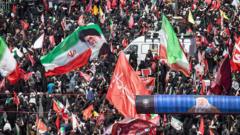
The coffins of Khamenei and his relatives were flown to Mashhad from Iraq, where they had been part of processions to prominent Shia shrines. Iranian television broadcast images of mourners in black, waving flags, and holding photos of the deceased leader as they processed through Mashhad.
Tensions with the US
Amidst the ceremonies, anti-US sentiment was palpable, with some mourners brandishing placards demanding the death of US President Donald Trump and Israeli Prime Minister Benjamin Netanyahu, who had sanctioned the attack on Iran. Banners with slogans urging resistance and unity were prominently displayed.
The funeral procession led Khamenei's coffin through throngs of mourners to the Imam Reza shrine, which holds significant religious importance as the resting place of the eighth Shia imam, revered by millions of pilgrims annually.
Khamenei's Legacy
Born in Mashhad, Khamenei rose to become the supreme leader in 1989 following the death of Ayatollah Ruhollah Khomeini, the Islamic Republic's founder. Throughout his 37-year tenure, Khamenei maintained tight control over Iran's political and military spheres, often taking a hard-line stance against external adversaries such as the US and Israel.
Iranian leadership sought to use Khamenei's meticulously organized funeral to project an image of strength and unity. This comes after a period marked by conflict and internal unrest, including mass protests against government crackdowns. However, the renewed hostilities with the US have overshadowed these efforts.
Uncertain Future
President Trump has threatened further US military actions following recent strikes, claiming they aim to undermine Iran's capacity to disrupt commercial shipping in the Strait of Hormuz. In response, the Iranian Revolutionary Guards reported retaliatory strikes on US-linked sites in the Gulf region.
Despite a recent memorandum of understanding (MoU) aimed at de-escalating hostilities, the situation remains volatile. The MoU, which included provisions to address Iran's nuclear activities and lift US sanctions, now hangs in the balance as Trump expressed skepticism about its viability.
Negotiations facilitated by Qatar had shown signs of progress before the recent escalation, with further talks expected after Khamenei's funeral ceremonies. However, the path to a comprehensive agreement remains fraught with obstacles.
Source: Original Article